
Do Solar Panels Need to Be Cleaned?
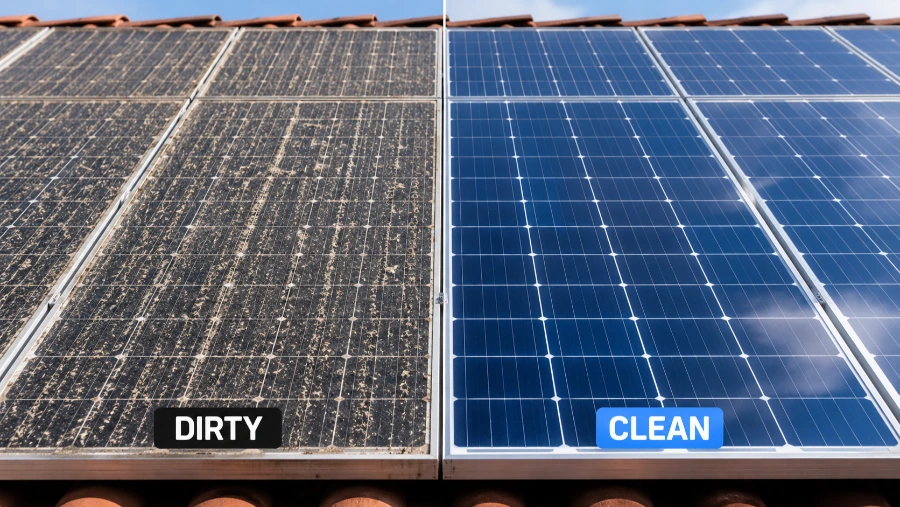
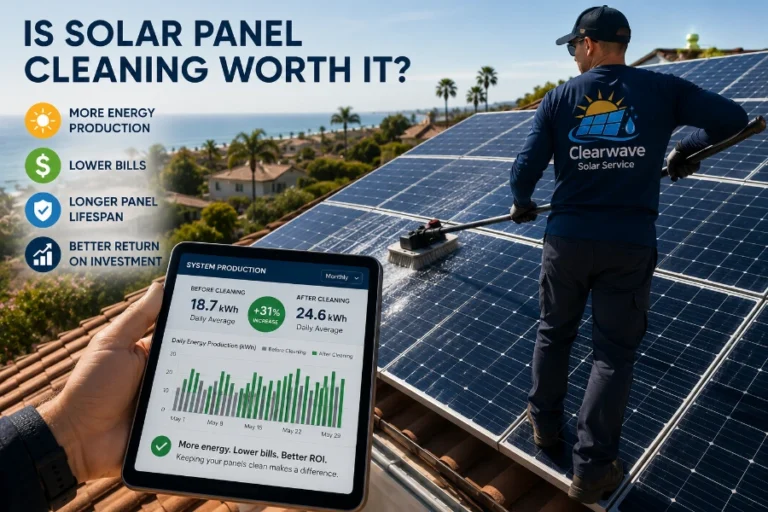
Yes, solar panels need to be cleaned. Dust, pollen, salt film, and bird droppings build up on the glass over time, and unlike a car windshield, panels are rarely wiped down as part of normal home maintenance. In most climates, panels lose somewhere between 5% and 25% of their rated output when soiling is left unaddressed, and the loss happens gradually enough that most homeowners never notice it happening in real time.
Why This Question Comes Up So Often
Solar panels are marketed as low-maintenance, and largely they are: no moving parts, no filters, no annual servicing requirement in the way an HVAC system has. That reputation leads a lot of homeowners to assume “low-maintenance” means “no maintenance,” which is not quite accurate. The panels themselves are durable. The glass surface they generate power through still gets dirty like any other glass surface exposed to weather.
What Actually Builds Up on Panels
- Dust and pollen, which loose rain typically handles reasonably well in most climates.
- Salt film, common within a few miles of any coastline, which bonds to glass as ocean-moisture evaporates and does not fully rinse away in normal rain.
- Bird droppings, which are acidic enough to etch glass and anti-reflective coatings if left long enough, and which sit at the higher end of the production-loss range.
- Wildfire ash and general airborne particulate, seasonal in many regions but capable of leaving a real layer even from a fire many miles away.
Does Rain Actually Clean Them?
Partially. Rain is genuinely effective against loose dust sitting on top of the glass. It is much less effective against anything that has bonded to the surface, which includes salt film and mineral residue from morning moisture. This is the single most common misconception about solar panel maintenance: rain helps, but it is not a substitute for cleaning in any climate with regular coastal exposure, heavy pollen seasons, or bird activity.
How Much Does Dirty Really Cost You?
Light dust might only cost a few percent of output. Bonded salt film or concentrated bird droppings can cost 15% to 25%. The part that actually costs homeowners the most is not the loss itself, it is that it is gradual: nobody notices a 2% dip, and by the time it shows up as a pattern in a utility bill or a solar monitoring app, the system has usually been underperforming quietly for months.
How Do You Know If Yours Need It?
A visible haze or streaking on the glass is the obvious sign, but production data is more reliable than eyesight, since panels can look reasonably clean while still carrying a thin bonded film. If your solar monitoring app shows a gradual, even decline across the whole system, that pattern usually points to soiling rather than a hardware problem. A sudden drop, or a decline isolated to specific panels, points more toward a defect, which cleaning alone will not fix. Our guide on telling soiling apart from an actual hardware defect covers this distinction in more depth.
How Often Does This Need to Happen?
This depends heavily on your specific climate and exposure, enough that it deserves its own answer. See our full guide on how often solar panels should be cleaned for the factors that actually determine your ideal schedule.
Frequently Asked Questions
Do solar panels really need to be cleaned, or is it a myth?
Yes, they genuinely need it in most climates, though how much depends heavily on where you live. Rain removes loose dust reasonably well, but it does not remove bonded residue like salt film, pollen, or bird droppings, which is why “rain keeps them clean enough” is only partly true.
What happens if you never clean your solar panels?
Production loss accumulates gradually, often unnoticed, until a full year of utility bills reveals the pattern. In heavy-soiling environments, years of neglect can mean sustained losses at the higher end of the range, along with a greater chance that debris or moisture buildup causes a secondary issue like hardware corrosion.
Does cleaning solar panels really improve energy production?
Yes, when there is meaningful soiling to remove. The size of the improvement depends entirely on how dirty the panels were beforehand, which is why a professional inspection before cleaning is more useful than a blanket percentage claim.