
Bird Nesting Under Solar Panels: The Real Fire Risk and What to Do About It
Most homeowners think about bird activity around solar panels as a mess problem. It is that, but the more serious issue is what a nest actually does to airflow and wiring underneath your array, and why insurers and fire officials treat this as a genuine fire-risk consideration rather than just a cleaning nuisance.
Why Panels Attract Nesting Birds
A solar array sitting a few inches above a roof creates exactly the kind of space gulls, pigeons, and songbirds look for: a raised, sheltered spot with a roof over its head and few natural predators able to reach it. San Clemente’s coastal bird population, particularly gulls and pigeons near the Pier and bluff-top neighborhoods, treats residential arrays as prime real estate for exactly this reason.
The Airflow Problem
Solar panels are designed with a gap underneath them specifically to allow air to flow and keep the panels from overheating in direct sun. Nesting material, twigs, feathers, and debris packed into that gap blocks the airflow the system depends on. A panel running hotter than it is designed to runs less efficiently, and prolonged excess heat is exactly the kind of stress that shortens the life of electrical components.
The Wiring Problem
Nesting material sitting directly against wiring and junction boxes is a genuine concern, particularly combined with the corrosive effect of acidic droppings on connectors and mounting hardware over time. This is not a hypothetical: it is a well-documented reason solar maintenance guidance treats bird proofing as a real preventative measure rather than a cosmetic one.
What Droppings Do to the Glass
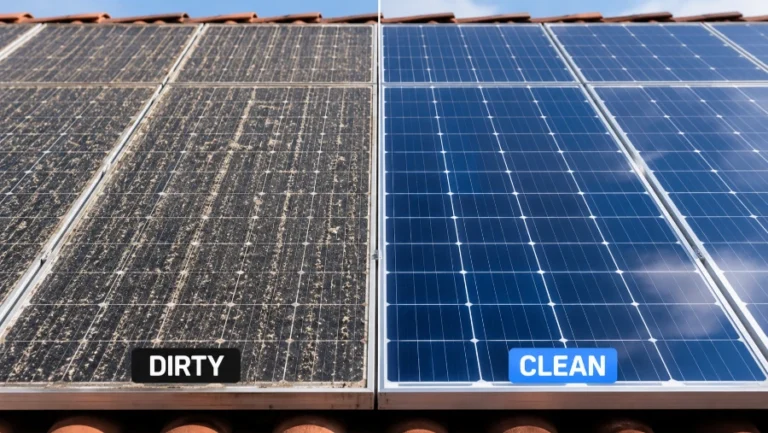
Beyond the fire and airflow concerns, bird droppings are acidic enough to etch panel glass and anti-reflective coatings if left long enough, which is a permanent effect, not something a later cleaning fully reverses. Concentrated droppings sit at the higher end of the range for production loss from soiling, sometimes as much as 15 to 25 percent on the affected panels.
What Actually Solves the Problem
Cleaning alone does not stop birds from coming back. The real fix is physical mesh screening installed around the perimeter of the array that blocks access to the gap underneath without affecting airflow to the panels themselves. If birds have already nested, safe removal has to happen before the screening goes in. You can see more on our bird and pigeon proofing service page.