
Marine Layer and Solar Panels: What Coastal San Clemente Homeowners Should Know
Ask a solar panel owner in a dry inland climate why their panels get dirty, and they will say dust. Ask someone in San Clemente the same question, and dust is only part of the story. The bigger, less obvious culprit here is the marine layer, and understanding what it actually does to your panels explains why coastal cleaning schedules look different from inland ones.
What the Marine Layer Actually Is
The marine layer is a low-lying bank of moist ocean air that rolls in overnight and through the morning, most heavily in spring and early summer. It is the gray, cool mornings that give way to clear afternoons. Meteorologically it is just fog and moisture, but it does not arrive empty. Ocean air carries dissolved salt and fine mineral particles, and as that moisture settles on a cool panel surface overnight and evaporates through the morning, it leaves those minerals behind.
Why It Is Different From Dust
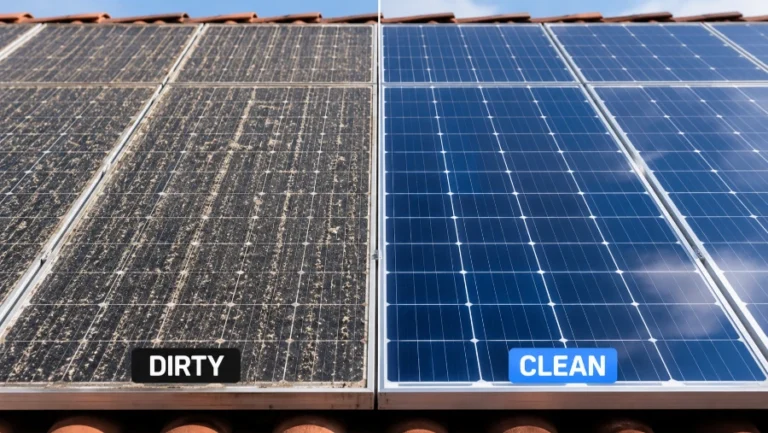
Loose dust sits on top of glass and a decent rain or even a firm hose rinse will move most of it. Marine layer residue is different because it is a mineral film that bonds to the glass surface as the moisture evaporates, similar to hard water spots on a shower door. One morning of marine layer is not a big deal. Thirty mornings in a row across a typical spring stretch is what creates the bonded haze that a garden hose will not remove.
Why Normal Rain Does Not Fix It
This is the detail that surprises a lot of homeowners. Once that mineral film has bonded to the glass, ordinary rain does not fully dissolve it the way it would loose dust. That is the direct answer to a common myth we hear often: rain does not keep panels clean enough in a marine layer climate, because the thing rain would need to remove is not sitting loosely on the surface anymore.
Which Parts of San Clemente Feel This Most
Every part of the city experiences the marine layer to some degree, but homes directly on the coast in Pier Bowl and North Beach, and bluff-top properties in Marblehead and Cyprus Shore, sit in the thickest and most persistent part of it. Inland neighborhoods like Rancho San Clemente often sit above the heaviest layer entirely, trading marine residue for more dust exposure instead.
What Actually Removes It
Deionized water is specifically effective here because it has had its mineral content stripped out, so it lifts the bonded film without leaving new mineral deposits behind as it dries. Soap can leave its own film residue, and tap water reintroduces the same mineral problem you are trying to solve. You can read more about our full cleaning process if you want the complete method.