
Is Solar Panel Cleaning Worth It?
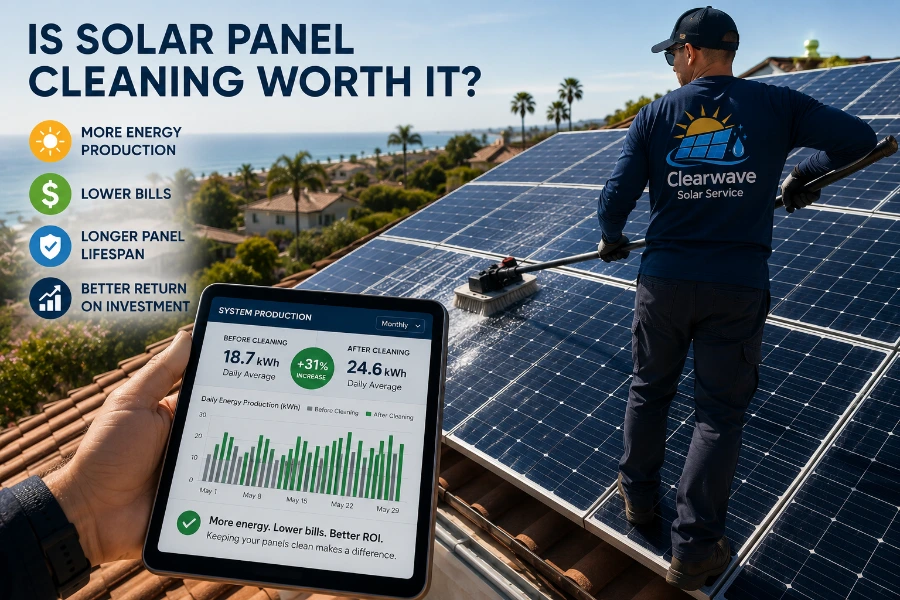
For most homeowners, yes, solar panel cleaning is worth it, provided the panels actually have meaningful soiling to remove. The value comes down to a simple comparison: the cost of the cleaning versus the value of the energy production it recovers, and for systems that have gone six months or more without attention, that math usually favors cleaning.
The Actual Math Behind the Question
A dirty solar system can lose anywhere from roughly 5% to 25% of its rated output, depending on how long buildup has been allowed to sit and how heavy it is. If a cleaning costs somewhere in the low hundreds of dollars and recovers even a modest percentage of a system’s output over the following months, the energy savings alone often cover the cost within a year, sometimes faster for systems with heavier soiling.
When It Is Clearly Worth It
- The system has gone a year or more without cleaning. Buildup compounds over that kind of timeframe, especially in coastal or dusty climates.
- Production has visibly declined in your solar monitoring app without an obvious cause like a hardware issue or a new source of shading.
- There is visible bird activity or heavy droppings, which sit at the higher end of the soiling-related production loss range and can also risk permanent etching if left too long.
When It Might Not Be Worth It Yet
A system that was cleaned recently, sits in a low-dust inland climate with regular rain, and shows no visible haze or production dip probably does not need attention yet. Cleaning panels that are not meaningfully dirty does not cause harm, but it also does not deliver much return, since there is not much soiling to remove.
The Cost People Do Not Think About: A Wrong Diagnosis
Here is a less obvious way cleaning pays for itself: it rules things out. If your production has dropped and you assume it is a hardware problem, you might spend money on a service call or a repair investigation that a simple cleaning would have resolved. If cleaning does not fix a persistent hotspot, that is valuable information too, since it points you toward a genuine hardware issue and, potentially, a warranty claim rather than a guessing game. Our guide on telling soiling apart from an actual defect covers exactly this distinction.
DIY vs. Professional: Which Is the Better Value?
A garden hose rinse from the ground is a reasonable, low-cost way to knock off loose dust and is worth doing between professional visits. What it will not remove is bonded salt film or baked-on residue, and it will not tell you whether an underperforming panel is dirty or defective. Climbing onto the roof yourself to clean more thoroughly introduces real safety risk, particularly on tile roofing or near skylights, and that risk is really what you are paying to avoid with a professional service, not just the cleaning itself.
Frequently Asked Questions
Is solar panel cleaning worth the cost?
For most homeowners with any meaningful soiling, yes. A cleaning that recovers even a modest percentage of lost production typically pays for itself within a year through recovered energy value, and that math improves further for homes with heavier coastal, dust, or bird-related soiling.
How do I know if my panels are dirty enough to make cleaning worth it?
A visible haze on the glass is one sign, but a gradual, even decline in your solar monitoring app is more reliable, since panels can carry a meaningful film without looking obviously dirty from the ground.
Is DIY cleaning a better value than hiring a professional?
It depends on your roof and your comfort with heights. A garden-hose rinse from the ground is low-risk and reasonably effective against loose dust. Getting on the roof yourself introduces real safety risk, particularly on tile roofs or near skylights, which is where the value of a professional service is less about the cleaning itself and more about not getting hurt doing it.